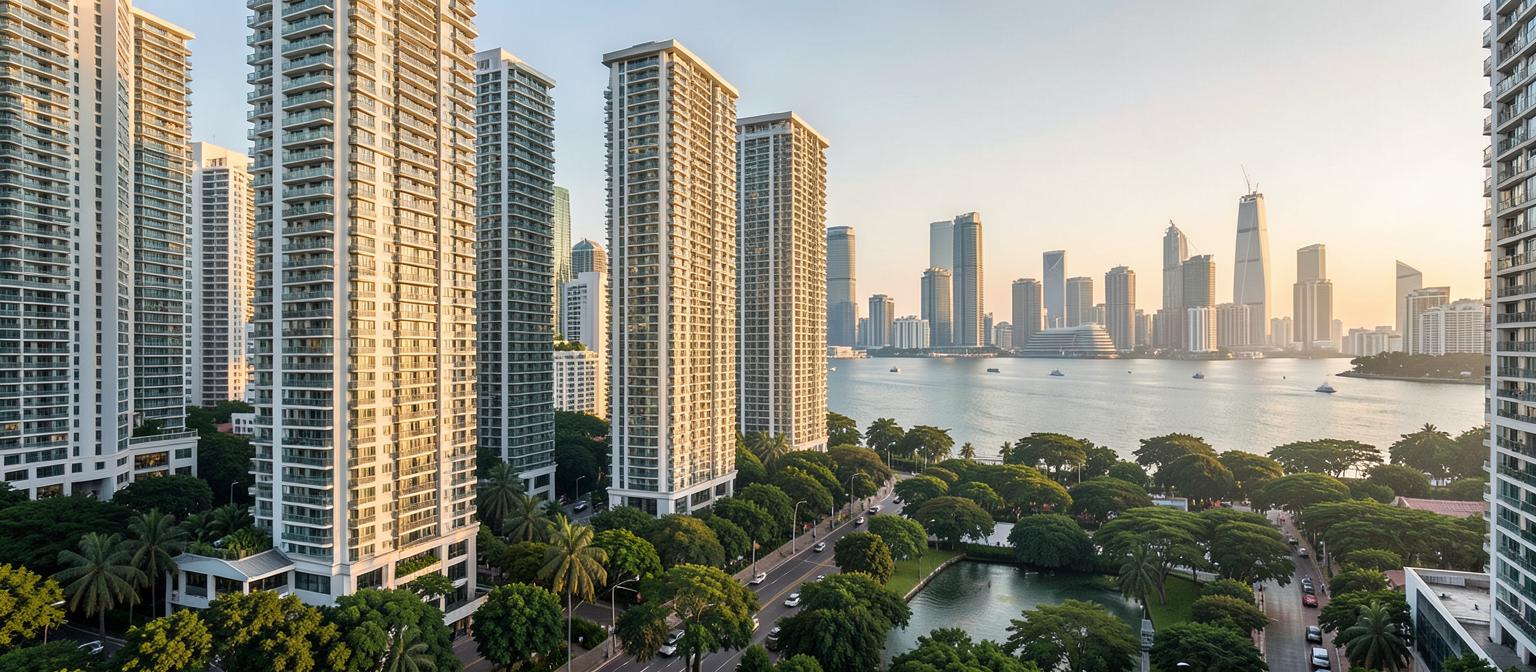
A complete relocation hub for anyone moving to Singapore — whether you are relocating for work, joining family, retiring or moving a household internationally for the first time. Costs, shipping, visas, customs, housing, schools, pets and vehicles in one place.
Singapore charges no duty on ordinary household goods, but 9% GST applies unless relief is granted for used personal effects — and every shipment needs an electronic permit filed through TradeNet before it can be released.
Singapore Customs grants relief on GST relief declaration for used personal effects, lodged in TradeNet by a licensed declaring agent, but the paperwork must be complete before arrival.
Major arrival cities
Orchard / River Valley · East Coast · Bukit Timah
Singapore Changi (SIN)
Plan
Why people move to Singapore
A regional headquarters base: most multinationals running Asia-Pacific operations hire here, and the Employment Pass and ONE Pass routes are built for that market
English is an official working language, so contracts, banking, schooling and government admin are all handled in it
Compact and exceptionally well connected — the MRT network and Changi Airport remove most of the need for a car
One of the world's largest container ports, which means frequent sailings and short port dwell times for household shipments
Strong international-school provision and a large established expat community across Asian, European and North American origins
Overview
Moving to Singapore
How households actually arrive in Singapore: where they move from, how their goods travel, and what customs and tax treatment to expect.
Common origin countries
United States
United Kingdom
Singapore
United Arab Emirates
Germany
India
Customs treatment depends on your origin as much as on Singapore — see the origin selector below.
Typical shipment methods
• Ocean freight carries the large majority of household shipments to Singapore, arriving through Port of Singapore (PSA) or Jurong Port.
• Shared-container (LCL / groupage) suits studios and one-bedroom loads; a sole-use 20ft or 40ft container suits full family homes.
• Air freight is used for a small essentials shipment that arrives ahead of the sea container — typically 100–300 kg.
Typical moving volumes
Household
Volume
Usual shipping option
Studio / partial load
3–5 CBM
LCL groupage or luggage express
1-bedroom apartment
8–12 CBM
LCL consolidated groupage
2-bedroom home
18–22 CBM
20ft sole-use container
3-bedroom home
28–32 CBM
20ft high-cube or 40ft container
4+ bedroom home
45–60 CBM
40ft high-cube container
Customs considerations
Singapore Customs grants relief on GST relief declaration for used personal effects, lodged in TradeNet by a licensed declaring agent, but the paperwork must be complete before arrival. Required registration: Employment Pass, S Pass or other long-term pass.
Customs difficulty: Moderate
VAT & duty considerations
Household goods entering Singapore are in principle liable to import duty and 9% import VAT. GST relief for used household articles is the relief that removes that charge for genuine transfers of residence, filed with Singapore Customs. New purchases, goods owned for less than the qualifying period, alcohol, tobacco and vehicles are assessed separately and are the most common source of unexpected charges.
Moving from your country
Shipments arriving from the United States are treated as a third-country import into Singapore. Relief from duty and the 9% import VAT normally depends on GST relief declaration for used personal effects, lodged in TradeNet by a licensed declaring agent filed with Singapore Customs, evidence that you lived in the United States for the required qualifying period, and an itemised inventory. Documentation issued in the United States (proof of address, visa, ownership records) is what customs will ask for.
Shipping option
Typical volume
Indicative cost
Transit
Ocean LCL (shared container)Partial household moves and apartment shipments
Under 14 CBM
$35 – $90 / CBM ($1,500 minimum)
3 – 8 weeks
Ocean FCL — 20ft container1–3 bedroom full household moves
14 – 33 CBM
$2,500 – $13,000 per container
3 – 8 weeks (EU) / 6 – 10 weeks (Oceania)
Ocean FCL — 40ft container3–5 bedroom moves plus vehicle transport
33 – 67 CBM
$4,000 – $19,000 per container
3 – 8 weeks (EU) / 6 – 10 weeks (Oceania)
Air freight (expedited)High-value gear and time-critical relocations
Any — charged by weight
$2.50 – $8.50 / kg
3 – 7 days
Cross-border FTL / LTL (ground)Regional road freight on mainland South-East Asian corridors
Households typically budget from $3,000 door-to-door for a container move, with the final figure set by volume, service level and season. Use the estimator for a route-specific range.
Shipment volume
Volume in cubic metres is the single largest driver — decluttering before survey is the cheapest saving available.
Service level
Port-to-port, partial pack and full door-to-door packing differ by thousands on the same load.
Access at both ends
Narrow streets, stairs and permit parking in Orchard / River Valley can require a shuttle vehicle and extra crew.
Season
May to September sailings and vans book out first and price highest; shoulder months are materially cheaper.
Customs and destination charges
Terminal handling, Singapore Customs inspection, quarantine and storage are billed to you and are usually excluded from headline freight rates.
Focused pricing for the routes people move most.
We're building detailed benchmarks for the world's most-used relocation corridors, so you get your move size, recommended shipping method and a realistic door-to-door cost before you request quotes. If your route isn't benchmarked yet, we generate a modelled planning estimate from distance, volume and service level.
Estimated moving cost range
A realistic low-to-high bracket for your route
Recommended shipping method
Shared container, full container or air freight
Typical transit time
How long your belongings are likely to travel
About 2 minutes · No account required · No obligation
This is an estimated relocation cost for planning purposes, not a binding quote. Final pricing is confirmed by a vetted international moving partner after a survey.
Plan
Visa & immigration routes to Singapore
High-level educational overview of the residence routes most relocating households use. This is not legal or immigration advice.
Employment Pass (EP)
Overseas Networks & Expertise (ONE) Pass
S Pass
EntrePass
Dependant's Pass
Most commonly used by: Professionals, Families, Entrepreneurs.
Educational information, not legal advice. Immigration rules, thresholds and processing times change frequently and depend on your nationality and circumstances. Confirm current requirements with the Singapore immigration authority or a qualified adviser before you commit to a moving date.
Execute
Housing and your first weeks in Singapore
Almost everyone rents, and most expat households take a condominium with shared facilities; HDB flats can also be sublet. Leases usually run two years with a diplomatic clause, and one to two months' deposit is standard. Property-agent fees and move-in lift bookings are handled at signing.
Need somewhere to live while you settle in?
Powered by AltoVita
Find furnished temporary housing through our AltoVita partnership.
MyExpatGo helps connect you with temporary housing options. Availability is subject to AltoVita and provider inventory — MyExpatGo does not guarantee or book accommodation.
Central condominiums with booked lift access and strict move-in windows
$$$$
East Coast
Family-oriented condos and low-rise homes close to Changi
$$$
Bukit Timah
International-school belt with landed housing and tight driveways
$$$$
Harbourfront / Sentosa
Waterfront homes with limited access windows for large vehicles
$$$$
Plan
Schools and family life in Singapore
Local schools prioritise citizens and permanent residents, so most relocating families use international schools. Places at the best-known schools are limited and applications often open a year ahead — start before you accept the posting if you can.
Working language: English (official, with Mandarin, Malay and Tamil). Apply to schools before you ship — admission dates rarely align with container transit.
Plan
Moving pets to Singapore
Pet import rules for Singapore are set by the national veterinary authority and typically involve microchipping, rabies vaccination and an official health certificate issued close to travel.
Importing a car is exceptionally expensive: a Certificate of Entitlement must be bid for, on top of registration fees and excise duty, and imported used cars over three years old cannot normally be registered. Singapore drives on the left and public transport is excellent, so most arrivals do not ship a vehicle.
Singapore is one of the easiest destinations in the world to live in without a car. The MRT and bus network covers the whole island, taxis and ride-hailing are plentiful, and Changi Airport (SIN) is 20–30 minutes from most residential areas. Car ownership requires a Certificate of Entitlement bid on top of the vehicle price, so most arriving households do not ship or buy a car.
Driving licence
Whether you can drive on your existing licence, for how long, and whether it can be exchanged rather than re-tested depends on the country that issued it and on your residence status in Singapore. Check the national licensing authority before your current entitlement runs out.
Execute
Singapore customs and transfer of residence
Last reviewed 2 September 2026
1
Appoint a declaring agent before the shipment sails
All imports need an electronic permit lodged in TradeNet by a licensed declaring agent. Your destination moving company normally acts as, or appoints, that agent.
2
Apply for GST relief on used household articles
Relief from the 9% GST is available for used personal effects and household articles brought in when you transfer residence, subject to Singapore Customs conditions. Anything new or bought shortly before the move is assessed on its value.
3
Check the controlled and prohibited list early
Chewing gum, e-vaporisers, certain publications, weapons including some knives, and radio equipment are controlled or prohibited. Penalties are severe, so screen the packing list before loading.
4
Time arrival with your pass approval
Relief is linked to your long-term pass. Goods that land before the pass is issued can be held, and port storage in Singapore is charged daily.
Prior foreign residence
Prove continuous residence outside the destination country for at least 12 consecutive months immediately before the move.
Prior ownership and use
Every shipped item must have been owned and personally used for at least 6 consecutive months before departure. Newly purchased goods are valued and taxed normally.
Transfer window and non-disposal
Goods must arrive within 12 months of the formal residency transfer, and cannot be sold, rented, pledged or transferred for 12 months after import.
Documents commonly required
Passport, plus your visa or residence permit for Singapore
GST relief declaration for used personal effects, lodged in TradeNet by a licensed declaring agent — the customs relief application
Valued, itemised inventory (packing list) signed by you
Bill of lading or air waybill issued by your moving company
Proof of your previous address in your origin country (utility bill, lease or tax record)
Proof of your new address in Singapore
Registration reference: Employment Pass, S Pass or other long-term pass
Singapore has both public and private healthcare. International residents commonly rely on private providers or international cover, particularly in the first months, while eligibility for public care is confirmed. Many households keep international or travel medical cover in place for the gap between departure and local enrolment. This is general information, not medical or insurance advice — confirm cover for your own circumstances before you move.
Health & Insurance Before Moving to Singapore
Moving to Singapore? Before you leave, review how you'll handle healthcare and international coverage in your new country — and make sure you understand what is and isn't covered for your situation. SafetyWing offers two Nomad Insurance options to explore; check current pricing, eligibility and full policy details directly with SafetyWing.
Coverage, eligibility, pricing and exclusions vary. Review the current policy details before purchasing.
Partner recommendation · MYEXPATGO may earn a commission from qualifying purchases.
Compare
Verified moving partners for Singapore
Accredited international moving companies in our network with proven capability on this destination. MyExpatGo is an independent platform — we are not a moving company.
Asian Tigers
🇭🇰 Hong Kong, Hong Kong SAR · since 1968
Asia's leading relocation group with 14 country offices across the region's primary commercial centres.
FIDI FAIM
IAM
Elite Shipping India
🇮🇳 Chennai, India · since 2010
India-based global relocation specialist offering fine art and pet relocation services.
IAM
Globe Moving
🇮🇳 Bangalore, India · since 1971
India's longest-established international mover, with a door-to-door network spanning 180+ countries.
FIDI FAIM
IAM
Intermovers
🇲🇾 Kuala Lumpur, Malaysia · since 1996
Malaysia corporate-relocation specialist and UniGroup Worldwide UTS partner with a 1,200-office network.
FIDI FAIM
IAM
BAR
KLH Movers
🇮🇳 Chennai, India · since 2014
Chennai-based customs-clearance and LCL-consolidation specialist for household goods and personal effects.
IAM
Licensed Customs Broker
NVOCC
Harvast
🇮🇩 Jakarta, Indonesia · since 2024
Jakarta-based moving and relocation specialist serving Indonesia and global destinations.
IAM
Partner availability on any specific corridor is confirmed when you request quotes. How we vet our partners.
Plan
Practical tips for moving to Singapore
Small things that make the first months easier — and the ones people most often leave too late.
Confirm your Employment Pass, S Pass or ONE Pass before booking the shipment — GST relief and clearance are tied to it.
Screen the packing list for controlled items: chewing gum, e-vaporisers, some knives and radio equipment are restricted or prohibited, and enforcement is strict.
Most condominiums require a booked service-lift slot and a refundable deposit for the move-in day; ask your agent as soon as the lease is signed.
Measure lifts and corridors before shipping oversized furniture — high-rise access, not the sailing, is the usual constraint.
Budget for serviced accommodation between landing and delivery; leases usually start on a fixed date and shipments clear separately.
Arrange health cover from day one — public subsidies are tied to citizenship and permanent residence, so employment-pass holders normally use employer or private insurance.
Singapore drives on the left; check whether your licence can be converted before your grace period ends.
Resources
Moving to Singapore: frequently asked questions
How much does it cost to move to Singapore?
There is no single country-wide price: the cost depends on where you are moving from, how much you ship, the service level and the season. Households moving a container to Singapore typically budget from $3,000 door-to-door as a planning benchmark. Use the MyExpatGo estimator for a route-specific range, or request quotes from vetted movers for a real price.
How long does international shipping to Singapore take?
Plan for around 4–7 weeks door-to-door on a typical lane. Ocean freight to the Port of Singapore; transit varies by origin — roughly 4–6 weeks from the United States and 3–5 weeks from Europe. Customs clearance, destination handling and delivery access all sit on top of the sailing time, so confirm the schedule with your mover for your specific route.
What can I bring into Singapore?
Used household goods and personal effects are the normal shipment. Relief from duty and the 9% import VAT is applied for through GST relief declaration for used personal effects, lodged in TradeNet by a licensed declaring agent with Singapore Customs, subject to eligibility. New purchases, alcohol, tobacco, vehicles and any restricted items are assessed separately — check the current rules with Singapore Customs before you pack.
Do I need a visa to move to Singapore?
Visa requirements depend on your nationality, purpose of stay and intended length of residence. Routes commonly used by relocating households include Employment Pass (EP), Overseas Networks & Expertise (ONE) Pass, S Pass. Confirm current requirements with the Singapore immigration authority or a qualified adviser.
Where do expats usually live in Singapore?
Orchard / River Valley, East Coast, Bukit Timah are the main arrival cities for international households. Most people rent first, often using temporary or serviced accommodation for the first weeks while they view long-term homes and wait for their shipment to clear.
Is healthcare accessible in Singapore?
Singapore has both public and private healthcare. International residents commonly rely on private providers or international cover, particularly in the first months, while eligibility for public care is confirmed. Many households keep international or travel medical cover in place for the gap between departure and local enrolment. This is general information, not medical or insurance advice — confirm cover for your own circumstances before you move.
How difficult is customs clearance in Singapore?
We rate it moderate. Singapore Customs grants relief on GST relief declaration for used personal effects, lodged in TradeNet by a licensed declaring agent, but the paperwork must be complete before arrival. Complete, accurate paperwork filed before arrival is the single biggest factor in avoiding storage and demurrage charges.
What should I do before moving to Singapore?
Confirm your visa or residence route, get a moving cost benchmark, compare quotes from accredited movers, file your customs relief paperwork, arrange temporary accommodation, and plan pets, vehicles and school places well ahead of your shipping date.
My Move Pro · Coming soon
Build your personalized Singapore relocation plan
My Move Pro turns this Singapore guidance into your own plan: the steps that apply to your household, the documents behind them, when each one is due, and what it is likely to cost.
This Singapore guide is published for general education and planning. It is not legal, tax, immigration or customs advice, and it is not a quotation. Always confirm current requirements with Singapore Customs, your visa authority or a qualified professional before shipping. Costs and transit times are indicative benchmarks.
Regulatory and customs content last reviewed 2 September 2026.